 Laboratoire MAPIEM (UR 4323)
Research Topics microbial ecology and ecotoxicology marine biofilms and biofouling diversity and drivers antifouling coatings contaminants bioaccumulation and bioindication anti-adhesion bioassay
Home > Keywords > Axis > MEBMB
MEBMB
Articles
-
 BRIAND Jean-François
3 June 2016 -
 Antifouling Coatings for War Ships
7 June 2016, by Hugues BRISSETFinancement:
EDA Project.B0001-GEM1-ERG and B0945-GEM1-ERG
Description:
The pressure of environment regulations has reached to ban tin containing antifouling coatings, which could have fulfilled the objectives of dry-docking intervals previously mentioned. In addition, other metallic compounds are considered to be regulated in a near future such as copper base products well known to-day as antifouling components.
New tin free self polishing / ablative antifoulings have been (…) -
 ORTALO-MAGNE Annick
3 June 2016Research Topics Marine biofilms, EPS, Polysaccharides Structural biochemistry
-
 Smart polymers for sustainable marine antifouling coatings
25 April 2024, by ChBECO-SmartAF :
Funding: ANR
Short Overview: The ECO-SmartAF project aims to develop new sustainable and environmentally friendly marine antifouling coatings to reduce the carbon footprint of maritime transport. Our approach is to design smart coatings that combine contact activity with appropriate amphiphilic surface chemistry, both of which prevent the adhesion of marine organisms. Smart alkoxyamine-based monomers will be designed to prepare seawater and/or enzyme-responsive polymers to (…) -
 CATAO C.P. Elisa
7 October 2022 -
 CÔTÉ Nathan
12 January, by FIFrom 05/01/2026 to 27/02/2026 Research Topics
Synthesis and characterization of molecularly imprinted polymers -
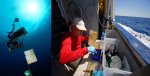 Bioindication of Mediterranean coastal environments associated with biofilms
30 March 2021, by JFBAcronym :
BIOFINDIC Funding :
Agence de l’Eau RMC Short Overview:
L’objectif du projet est d’étudier le potentiel des biofilms comme outil de bioindication de la qualité des masses d’eau méditerranéennes côtières. Elle repose sur deux parties complémentaires : (1) une étude directement couplée à la campagne en mer SUCHIMED, opéré par l’IFREMER, sur les biofilms qui auront colonisés 150 plaques A4 en PE immergées du 16 mars au 7 juillet 2021 sur 50 sites le long des 1800 km des côtes (…) -
 KERLOCH Lionel
15 September 2016From 01/02/2016 to 22/07/2016 Research Topics
Impact of copper on marine biofilms -
 Annotation de nouvelles classes de glycérolipides par l’approche des réseaux moléculaires au sein du métabolome de la macroalgue brune Taonia atomaria
25 May 2019 -
Etude et compréhension des modes d’expression des métabolites secondaires de la gorgone rouge de Méditerranée, Paramuricea clavata
9 June 2016, by Hugues BRISSETBeginning: 2008
Defence: July 11, 2012